
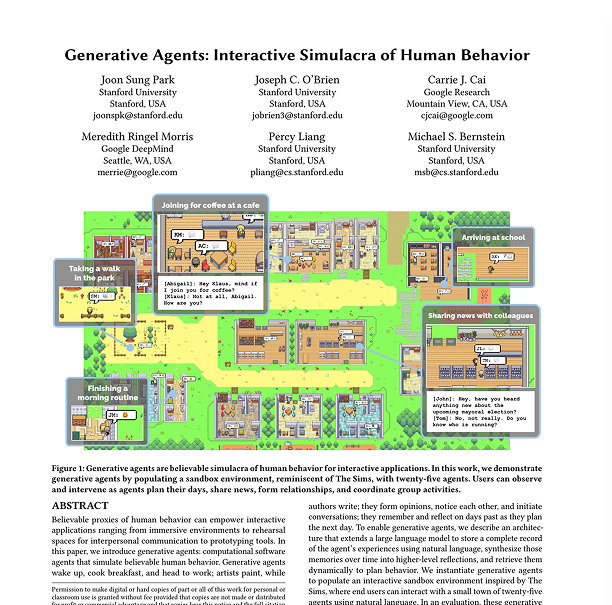
Simile $100M human behavior simulation is one of the most interesting “infrastructure bets” in the agent era. Joon Sung Park introduced Simile as a platform for simulating human behavior, and the company announced $100M in funding led by Index Ventures.

In an “agents everywhere” world, this matters because we’re shipping systems that interact with humans at scale, but we still don’t have great ways to simulate how real people react—over time, under pressure, and across edge cases.
Watch the announcement (video)
Watch the announcement video on X
What Simile is building (in plain English)
Simile positions itself as a simulation platform for human behavior—AI-driven simulations that show how and why customers, employees, or populations respond to change.
On its site, Simile describes building “the first AI simulation of society” populated by agents based on real humans, and developing a foundation model that predicts human behavior “in any situation, at any scale.”
Why simulation matters now: agents need environments
Most AI product failures don’t happen because the model can’t write a nice paragraph. They happen because humans are messy:
- people change goals mid-flow
- users misunderstand instructions
- incentives conflict inside teams and organizations
- emotions and trust matter
- multi-person dynamics create emergent outcomes
- adversarial behavior appears the moment you scale
So even if your tool-calling/RAG stack is solid, your product can still break in the real world. Simulation is the “wind tunnel” for agentic products.
Real-world use cases Simile mentions
Simile says leading companies are using the platform to:
- rehearse earnings calls
- model litigation outcomes
- test policy changes
Bloomberg reporting (syndicated via Moneycontrol) adds examples like predicting what customers might purchase, anticipating questions analysts might ask on earnings calls, and notes CVS Health has tested the service to inform decisions like store stocking and display.
What I’ll be watching next
A believable demo isn’t enough. The real signals are: scenario diversity, controllability, measurable outcomes, debuggability, and long-horizon dynamics.
Sources
- Simile — The Simulation Company: https://simile.ai/blog/the-simulation-company
- Index Ventures — Leading Simile’s Series A: https://www.indexventures.com/perspectives/life-the-universe-and-simile-leading-similes-series-a/
- Bloomberg coverage via Moneycontrol: https://www.moneycontrol.com/news/business/startup/ai-startup-nabs-100-million-to-help-firms-predict-human-behavior-13826092.html

Leave a Reply